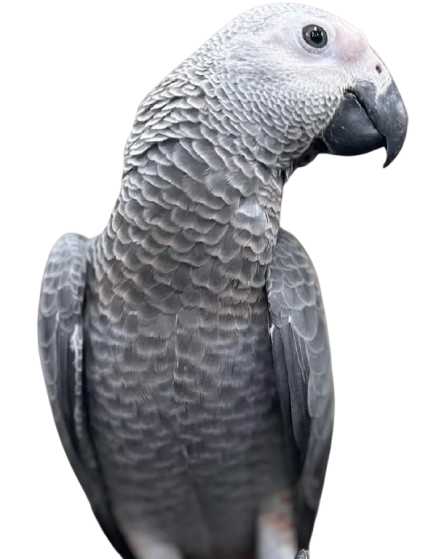
Do African Grey parrots talk
Do African Grey parrots talk? Yes. African Grey parrots are among the most capable talking birds kept as companions, and some can build surprisingly large vocabularies while also copying whistles, household sounds, songs, alarms, and other noises. But there is an important catch: not every African Grey will become a nonstop talker. Talking ability varies from bird to bird, and a Grey needs regular interaction, patience, mental stimulation, and opportunities to hear useful words in everyday situations. If you are considering an African Grey because you want a talking companion, the best approach is to choose a healthy, well-socialized bird and appreciate the personality behind the voice—not simply count how many words it knows.
Do African Grey parrots talk like humans?
They can sound remarkably human. That is one reason the African Grey has such a strong reputation among parrot keepers.
Unlike a recording device, however, a Grey does not have human vocal anatomy. It produces sounds using its own vocal system, yet it can reproduce the rhythm and characteristics of human speech with impressive accuracy. Research and observations involving African Greys have shown just how sophisticated their vocal learning can be.
This is where people sometimes misunderstand the question, do African Grey parrots talk? They do not hold conversations in exactly the same way people do. Instead, they learn sounds and may use particular words or phrases in appropriate situations. Some individuals become remarkably good at associating certain sounds with objects, people, activities, or requests.
That difference matters.
A parrot saying “hello” when somebody enters the room may simply have learned that the word belongs to that situation. Another Grey may use a word more deliberately to get attention or communicate something it wants. African Grey intelligence makes the subject considerably more interesting than simple imitation.
How many words can an African Grey parrot learn?
There is no reliable number that applies to every African Grey.
You will find stories of Greys learning dozens or even hundreds of words, and reputable bird-care sources describe the species as capable of developing extensive vocabularies.
Still, I would be careful about buying a bird based on a promise such as “this one will know 500 words.”
That is not how individual birds work.
One Grey may become an enthusiastic talker. Another may prefer whistles. A third may spend more time copying the microwave, telephone, doorbell, or a particular household noise than speaking recognizable words. VCA notes that even among birds capable of speech, individual birds vary considerably, and some may never become strong talkers.
So when someone asks do African Grey parrots talk, the honest answer is yes—but there is no guaranteed vocabulary.
Why African Greys are such impressive talkers
African Greys are exceptionally intelligent parrots. Their ability to imitate sounds is only one part of the picture.
They are highly observant. They listen to what happens around them and often repeat sounds that occur frequently. That means your Grey may learn words without you sitting down for a formal “talking lesson.”
Think about your daily routine.
If you greet the bird every morning with the same phrase, say “good night” before covering the cage, or repeatedly use certain words when offering food, those sounds become part of the bird’s environment. Lafeber’s guidance similarly emphasizes talking to parrots naturally and using words in context rather than endlessly repeating isolated words.
This is one of the easiest ways to encourage communication without turning training into a chore.
How to teach an African Grey parrot to talk
If your goal is to encourage talking, start with simple words that actually belong to your routine.
Choose short phrases such as:
- Good morning
- Hello
- Good bird
- Come here
- Want food?
- Good night
- Step up
- Bye-bye
- Water
- Treat
Say the phrase naturally when the situation occurs. If you offer food, for example, use the same simple word or phrase around feeding time.
Do not become frustrated if your African Grey spends weeks apparently ignoring you.
Parrots learn at different speeds.
Another useful point is to watch what the bird chooses to repeat. If your Grey keeps copying a particular whistle or household sound, that tells you something about what has captured its attention. You can gradually introduce spoken words without trying to suppress every natural vocalization.
And never punish a bird for making noises. Fear and punishment can damage trust, which is far more important than getting a parrot to say a particular phrase.
Do African Grey parrots talk better when they are young?
Young African Greys are often easier to socialize and introduce to new experiences, and young birds may adapt readily to new environments. VCA recommends exposing young birds to different people, situations, travel experiences, and veterinary visits as part of developing a well-adjusted companion.
But being young does not create a guarantee of speech.
I would put more emphasis on the bird’s overall socialization, health, temperament, and relationship with people than on its age alone.
A healthy adult African Grey can also learn sounds and behaviors. What changes is often the individual bird’s history and willingness to interact.
Congo vs. Timneh African Grey: which one talks more?
The two commonly recognized African Grey species are the Congo African Grey and the Timneh African Grey. Congo Greys are generally larger, while Timnehs are smaller and have different coloration, including a darker maroon tail.
Both are capable of impressive vocal mimicry.
So if you are choosing between a Congo and Timneh specifically because you want a talking parrot, I would not make talking ability the deciding factor. Individual personality can matter much more than simply choosing one type.
A confident, well-socialized Timneh can be an excellent communicator. A Congo may be quieter than expected. Birds have personalities, and that is part of what makes living with them interesting.
Top 10 things to look for when choosing an African Grey breeder
If you are researching do African Grey parrots talk because you are preparing to bring one home, breeder selection deserves serious attention.
1. Health comes first
Look for a breeder who can explain the bird’s health history and veterinary care clearly.
2. Proper socialization
Ask how the young parrots are exposed to people and normal household activity.
3. Honest talking claims
A responsible breeder should not guarantee that a particular baby will become a famous talker.
4. Clear species identification
Make sure you know whether you are purchasing a Congo or Timneh African Grey.
5. Weaning information
Ask what the bird has been eating and whether it is fully weaned.
6. Veterinary records
New birds should receive appropriate veterinary attention, ideally from an avian veterinarian familiar with parrots.
7. Good living conditions
Clean surroundings, safe housing, appropriate food, enrichment, and opportunities for movement should be obvious.
8. Questions are welcomed
A good breeder should be willing to discuss care, behavior, diet, socialization, and the long-term commitment.
9. No pressure
Be cautious when someone pushes you to make a quick payment simply because a bird is “the best talker.”
10. Look beyond the voice
The healthiest purchase is not necessarily the Grey that says the most words. Temperament, health, socialization, and compatibility with your household are much more important.
A practical user’s guide to living with a talking African Grey
Owning a talking African Grey means accepting that the bird will hear everything.
Your telephone ringing. A door closing. A laugh. A cough. The television. A strange little noise you make without noticing.
Some of those sounds may eventually come back at you.
That can be hilarious. It can also be surprising.
African Greys need substantial social and mental engagement, and boredom or loneliness can contribute to unwanted behaviors such as feather-destructive behavior.
Give your bird safe toys, opportunities to chew and forage, regular interaction, exercise, and a predictable routine. Talking should become part of a larger relationship rather than the entire purpose of owning the bird.
And remember that an African Grey is a long-term commitment. This is not a parrot to buy on impulse simply because you watched a clever talking video online.
Conclusion: Do African Grey parrots talk?
Do African Grey parrots talk? Absolutely. They are exceptional vocal mimics and are widely regarded as some of the finest talking parrots. Some develop impressive vocabularies, while others prefer whistles, sounds, or much quieter communication.
The smartest way to choose an African Grey is to look beyond the talking ability. A healthy body, stable temperament, proper socialization, responsible breeding, good nutrition, enrichment, and a strong human relationship are what make the difference over the years.
If your Grey eventually starts talking, enjoy it. If it learns only a handful of words, enjoy that too. The personality sitting on the perch is the real companion—not the number of phrases it can repeat.
Frequently Asked Questions
Do African Grey parrots talk?

Yes. African Grey parrots are highly skilled vocal mimics and can learn human words, phrases, whistles, songs, and everyday household sounds. However, individual birds vary, so no responsible breeder can guarantee that every African Grey will become a highly vocal talker.