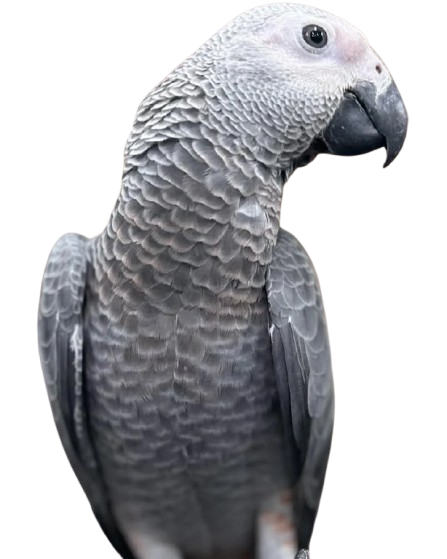
Who Is the Breeder: Mr. John, Professionally Known as Mr. Parrot?
My name is Mr. John, although people who know my work in the parrot community often know me professionally as Mr. Parrot. I have spent years working with African Grey parrots, and one thing this experience has taught me is that these birds require patience and careful attention at every stage of their development.
African Greys are exceptionally intelligent birds. They notice small changes in their surroundings, learn quickly, and each one can develop a very different temperament. Some are naturally curious and want to investigate everything around them. Others prefer to watch quietly before deciding that they are comfortable.
That difference in personality is something I pay attention to every day.
My approach to raising African Greys is based on consistent care, cleanliness, observation, appropriate nutrition, gentle handling, and allowing each bird to develop at its own pace. I do not believe that raising a parrot is simply a matter of feeding it and preparing it for a new home. The daily routine matters, including the way a young bird responds to people, its surroundings, food, handling, and changes in routine.
Through my work as Mr. Parrot, my goal is to help prospective African Grey owners understand what they are taking on while giving the birds in my care the attention they deserve.
Where Are Our African Grey Parrots Raised?
Our African Grey parrots are raised in California, in an environment organized around their daily care and development.
The birds have designated areas for feeding, resting, activity, observation, and human interaction. Keeping the environment clean is part of the ordinary routine, not something that is done only when a customer is expected.
I pay attention to the details that can easily be overlooked. Fresh food and water, clean surfaces, suitable perches, safe surroundings, ventilation, and regular observation all form part of caring for parrots properly.
African Greys are observant by nature, so their surroundings matter. A noisy or poorly managed environment can make some birds uncomfortable, while a predictable routine can help them settle and become more confident.
I also believe there is a difference between a facility that looks impressive and one that is genuinely well maintained every day. For me, the second one matters much more.
How Long Have You Been Working With African Grey Parrots?
My experience with parrots has given me plenty of opportunities to observe how African Greys grow, learn, and respond to people.
Over the years, I have learned not to judge a young African Grey too quickly. A bird that seems reserved one week may become remarkably curious later. Another may be comfortable stepping up but still need more time before accepting unfamiliar surroundings.
That is why I prefer a patient approach.
Young parrots need opportunities to learn normal routines without being overwhelmed. Handling, interaction, feeding, environmental changes, and exposure to ordinary household sounds can all become learning experiences when introduced appropriately.
There are also those little moments that make working with African Greys especially interesting. You may notice a bird suddenly become fascinated by a particular sound, begin copying something it hears regularly, or start investigating an object it previously ignored.
Those small changes are part of what makes raising these parrots so rewarding.
Who Helps Care for the African Grey Parrots?
Caring for parrots is a daily responsibility, and I am not the only person involved.
My wife, Sarah, helps with the birds and plays an important role in maintaining their daily routine. Having another person involved allows us to share responsibilities and keep a close eye on the birds.
Our routine includes feeding, cleaning, checking the birds’ behavior, maintaining their surroundings, and making sure their basic needs are being met.
Sarah also helps observe individual birds. Sometimes another person notices a small behavioral change that might otherwise be missed. With intelligent birds such as African Greys, paying attention to those small differences can be useful.
For us, caring for the birds is not something that begins when someone places an order. Their welfare comes first while they are in our care, whether or not a particular bird has a prospective home waiting for it.
What Is the African Grey Parrot Facility Like?
The facility is arranged with the practical needs of African Grey parrots in mind.
I prefer a clean and organized environment where the birds can follow a reasonably consistent routine. Housing, feeding areas, perches, enrichment, and cleaning procedures all need regular attention.
African Greys are intelligent enough to become bored when their environment provides little stimulation. For that reason, appropriate enrichment and opportunities to investigate their surroundings are important parts of their daily experience.
At the same time, I do not think every moment needs to be filled with activity. Parrots need periods of quiet and rest as well.
This is one of those areas where observation makes a difference. A bird may enjoy investigating something one day and completely ignore it the next. Another may become particularly interested in a new object. Rather than treating every African Grey exactly the same, I try to pay attention to the individual bird.
The basics remain important: clean surroundings, suitable food, fresh water, safe housing, appropriate enrichment, and regular observation.
It is not complicated in theory. Maintaining that standard consistently is the part that requires work.
How Are Our African Grey Parrots Socialized?
Socialization is introduced through calm and positive interaction rather than trying to force a bird to become friendly.
African Greys are intelligent and can be sensitive to unfamiliar situations. I have found that patience generally works better than trying to rush progress.
Young birds are gradually exposed to human interaction and ordinary sounds and activities. Gentle handling can help them become familiar with hands and people, while allowing them to retreat or pause when they are uncomfortable gives them time to build confidence.
Not every African Grey responds in exactly the same way.
One bird may eagerly approach a person. Another may remain several steps away and simply observe. I do not consider that automatically a problem. Sometimes the bird is simply processing something new.
The goal is not to create a parrot that reacts identically to every person. The goal is to help the bird become comfortable with appropriate human interaction while respecting its individual temperament.
I also believe that socialization should continue after a bird leaves the breeder. A new owner has an important role in helping an African Grey adjust to its new household.
What Do We Consider Before an African Grey Leaves Our Care?
Before an African Grey goes to a new home, there are several practical things that need to be considered.
The bird’s stage of development and readiness are important. The receiving home also needs to be prepared with suitable housing, food, perches, enrichment, and a safe environment.
We discuss the basic arrangements with the prospective owner and make sure the necessary information is understood before the bird leaves our care.
Transportation is another part of the process that should not be treated casually.
The planned destination, travel arrangements, expected weather conditions, and receiving arrangements all need to be considered. If circumstances create a genuine concern about the journey, it may be better to postpone the trip than to rush.
I would rather have a customer wait a little longer for a properly arranged journey than put an African Grey through an unnecessarily difficult travel situation.
Once the bird arrives, the first few days in a new home are important. Even a confident parrot may need time to understand its new surroundings. A quiet space, familiar routines, appropriate food, and patience can make the transition easier.
What Makes African Grey Parrots Different?
One reason I enjoy working with African Greys is that they are never simply “one type of personality.”
Their intelligence is obvious, but their individual behavior can be surprisingly different.
Some birds are vocal and interactive. Some spend more time observing. Some become attached quickly, while others build trust gradually.
African Greys also need mental stimulation. Toys, safe opportunities to explore, training, interaction, and changes in enrichment can help keep their environment interesting.
But there is a balance here. More stimulation is not automatically better. A bird also needs adequate rest and a place where it can feel secure.
That balance is something new owners sometimes learn only after bringing their first African Grey home.
What Should New African Grey Owners Prepare Before Bringing a Bird Home?
I encourage prospective owners to prepare before the bird arrives rather than trying to buy everything afterward.
A suitable cage should already be assembled in a safe location. Food and water bowls should be ready, and the owner should have appropriate food available.
Perches should be selected carefully, and toys should be safe for parrots. The room should also be checked for hazards such as open windows, unsafe household objects, exposed electrical cords, toxic substances, and other dangers.
It is also sensible to identify an avian veterinarian before an African Grey arrives.
Perhaps the most important preparation, though, is mental.
An African Grey is not a short-term purchase. This is a long-lived companion that needs attention, stimulation, appropriate nutrition, veterinary care, and a stable environment for many years.
My Approach as Mr. Parrot
As Mr. John, professionally known as Mr. Parrot, I try to keep my approach straightforward.
I want prospective owners to understand that there is a real responsibility behind raising and keeping an African Grey parrot. The beautiful feathers and impressive intelligence are only part of the story.
The everyday work matters too.
Cleaning, feeding, observation, socialization, enrichment, preparation, and patience are not glamorous parts of breeding, but they are the things that build a proper routine for the birds.
I also understand that choosing an African Grey is a major decision. People should have the opportunity to ask questions, think about their circumstances, and decide whether this type of companion bird is genuinely suitable for them.
My role does not end with showing someone a bird. I want the person considering an African Grey to understand the commitment involved and to approach ownership with realistic expectations.
That is the standard I try to maintain as Mr. Parrot.
Our Commitment to the Birds
Every African Grey has its own temperament and its own pace of development. Because of that, I do not believe in treating every bird as though it were identical.
The birds in our care receive daily attention, and we monitor their behavior and surroundings as part of our routine. We focus on the fundamentals that matter over time: appropriate care, cleanliness, nutrition, safe housing, interaction, enrichment, and careful observation.
My wife Sarah and I share the responsibility of maintaining that routine.
There is always something new to learn when working with parrots. Even after years of experience, I still find myself paying attention to small behavioral changes and adjusting routines when an individual bird needs something different.
That, to me, is part of responsible parrot care.
Final Thoughts From Mr. Parrot
If you are considering an African Grey parrot, take your time and learn about the species before making a decision.
These birds can be fascinating, affectionate, intelligent companions, but they also require commitment. Their needs do not disappear once they leave the breeder’s care. In many ways, that is when the owner’s most important responsibility begins.
I am Mr. John, professionally known as Mr. Parrot, and I believe good parrot care starts with being honest about both the rewarding parts and the work involved.
My goal is simple: provide thoughtful care for the African Greys in my environment, communicate clearly with prospective owners, and help new families understand what it really means to share their home with one of these remarkable parrots.